
When multifamily buildings are still being framed in October, completing the building envelope can extend well into a Gallatin Valley winter. As temperatures drop, crews may need temporary heat to continue working inside, even though portions of the shell remain open. If that heat is introduced before the air barrier is complete, warm, moist indoor air can escape through gaps and reach cold surfaces inside the walls.
For multifamily insulation projects in Bozeman, MT, the safest sequence is to complete and inspect the continuous air barrier before introducing interior heat into a cold shell.
The number of Gallatin Valley multifamily construction projects underway is putting added pressure on winter scheduling and crew availability. Bozeman recently added 370 affordable housing units, with more than 700 under construction and another 557 in development. A 296-unit workforce housing project near Fowler Lane broke ground this past summer, increasing the workload heading into winter 2026–27.
That level of construction activity can leave GCs with a tight four-week window to line up crews and complete envelope work before colder weather increases the risk of condensation. Schedule multifamily insulation and air barrier work alongside dry-in, so crews aren’t trying to finish the envelope after other trades have moved in. An envelope walkthrough before the shell closes can identify any unfinished air sealing or other work that needs attention.
Why Multifamily Insulation in Bozeman, MT Runs on the Calendar, Not the Thermometer
Gallatin County Sits in Climate Zone 6B
Gallatin County is in IECC Climate Zone 6B (Cold Dry), as is the rest of Montana. For climate zone 6B insulation, air sealing becomes especially important when construction continues into winter, and temporary heat is introduced before the building is finished.
Montana’s 2024 International Energy Code took effect September 26, 2026. Bozeman and Belgrade each have certified local building code programs, while the State Building Codes Bureau oversees projects elsewhere in Gallatin County.
GCs should start by finding out which office handles the permit. Projects in the same climate zone might need to go through different permitting offices. For multifamily insulation in Belgrade, MT, or other parts of Gallatin County, check the envelope requirements before picking materials and setting the installation schedule.

Cold Shells and Warm Interiors Create the Condensation Window
Cold outdoor air generally holds much less moisture than warm interior air. When a building is heated during winter construction, that difference becomes a concern wherever indoor air can reach cold surfaces within the enclosure.
Four conditions create the risk: a cold surface, an air leakage path through the air barrier, warm, humid indoor air, and no way for the assembly to dry. The first three can cause condensation, while the lack of a drying path lets moisture accumulate. A partially enclosed building with temporary heat running may have all four.
When warm air moves up through a building, it creates pressure near the top floors and roof. Even with fans off, this pressure can push humid indoor air through gaps into cooler wall or roof areas. Because of this, cold weather insulation sequencing must account for air barrier completion, not just the date insulation crews are available.
What That Means for a Winter Schedule
Temporary heat isn’t the only thing that adds moisture inside. Concrete curing, drywall mud, and taping also bring in moisture during construction, often while crews are still finishing parts of the enclosure.
Moisture can build up inside walls and roof assemblies long before any visible signs of trouble appear. If it has nowhere to dry, mold growth, rot, corrosion, and sheathing delamination can follow.
For dry-in sequencing in cold climates, finish the air barrier before turning on temporary heat so crews can still reach and seal any gaps before insulation and finishes cover their work.
Sequencing the Air Barrier Before the Shell Closes
The Air Barrier Is a Milestone, Not a Trade Follow-Up
An air barrier must be continuous to work as intended. This includes connections between the foundation, rim, walls, and roof, as well as penetrations made by other trades.
In cold climates, a continuous air barrier is one of the most effective ways to control condensation within walls and roofs. Placing the air barrier on the exterior side of the assembly can make it easier to maintain continuity and inspect connections than relying on interior polyethylene.
Crews should inspect the air barrier while they can still see the joints, connections, and penetrations. A blower-door test can detect leaks that aren’t obvious to the eye. Seal any openings found before insulation and drywall cover them.
Some assemblies use two continuous air barriers for added protection. Both need to be properly sealed. Vapor retarders are a different matter. Installing them on both sides of an assembly can trap moisture and limit its ability to dry.
Good air barrier scheduling gives the GC a clear inspection milestone for air barrier systems and time to correct issues before insulation and drywall. For commercial air barrier work in Montana, the GC should settle ownership of those connections before the crews arrive.
Multifamily Adds Compartmentalization to the Problem
Apartment buildings have another set of openings to consider—those between individual units.
Model energy codes don’t classify common walls as part of the building thermal envelope. As a result, teams can overlook them when they focus on exterior walls and roof connections.
Fire-resistance-rated separation walls are among the most difficult areas to seal in multifamily buildings. Their perimeter gaps need materials that meet the applicable testing and fire-rating standards. Ordinary gap fillers may not be suitable for these assemblies.
Apartment compartmentalization air sealing helps limit drafts, sound, smoke, contaminants, and moisture-laden air moving between units. It can also reduce infiltration loads. That work needs an assigned trade and a place on the schedule, even though the partitions aren’t part of the exterior thermal envelope.
Testing Realities the Schedule Has to Absorb
Testing an apartment isn’t the same as testing a single-family house. A blower-door test of one unit measures leakage to neighboring units as well as leakage outdoors. That can complicate interpreting the results.
Guarded testing separates leakage to the outdoors from leakage between apartments. Compared with testing a single unit, it takes longer, costs considerably more, and requires greater access and coordination across the building.
Decide which test the project needs while you’re working out the schedule. For blower door testing on multifamily buildings, schedule the tests after crews seal penetrations, while the walls are still open. If leaks show up, you can address them without tearing into finished work.
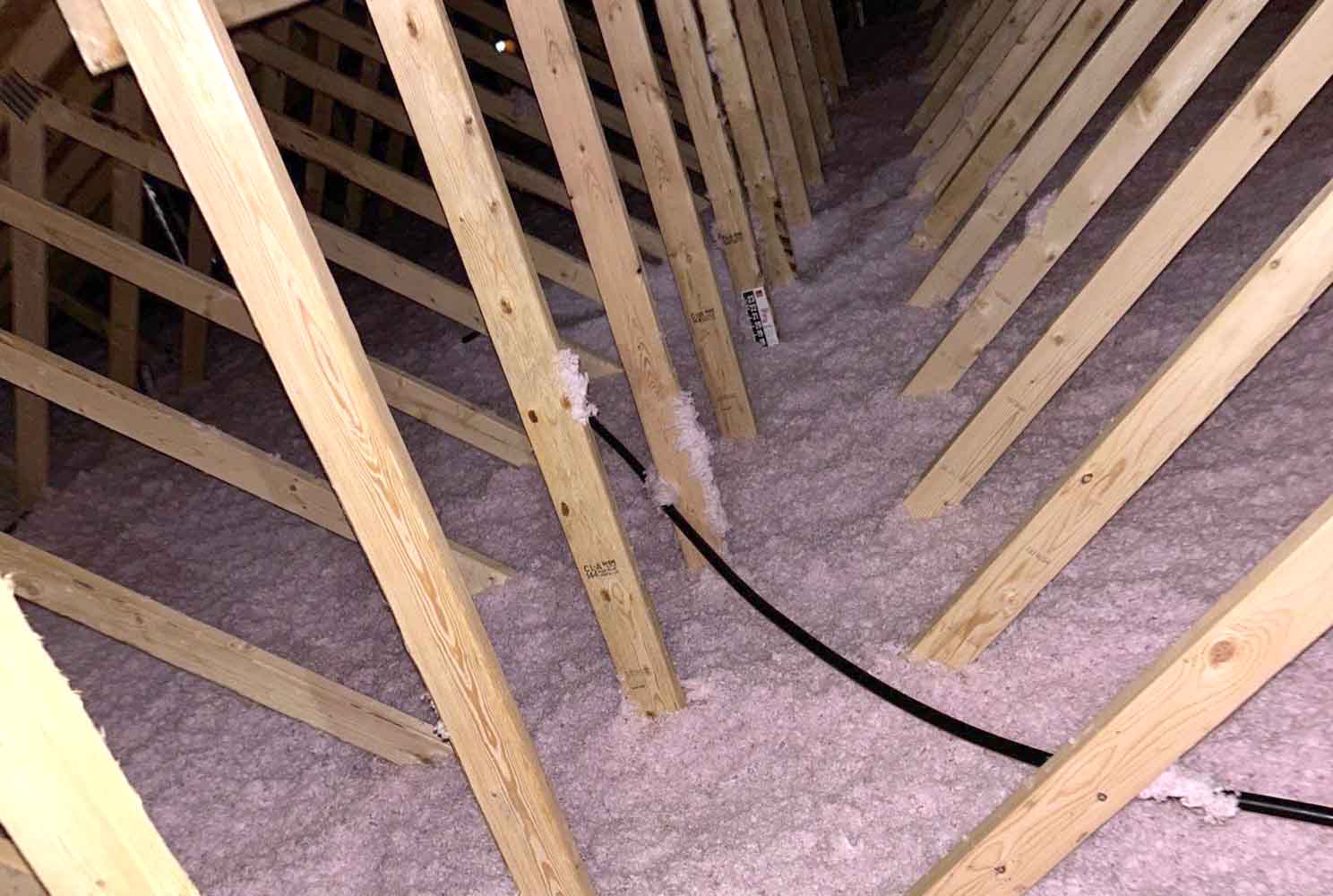
Good insulation values won’t compensate for unsealed openings. It’s one reason why buildings leak more than their R-value suggests, even when the specified insulation is installed correctly.
A Winter Envelope Sequence GCs Can Put on the Schedule
Order of Operations
Don’t wait until the insulation crew is due on-site to work out the winter envelope schedule. By then, the shell should be dried in, with the water, air, and vapor control layers in place. Temporary heat comes after that work, so warm, moist air isn’t being introduced into an unfinished enclosure.
While the walls are still open, have crews check the air barrier at penetrations and wherever different assemblies meet. Seal any gaps before insulation covers them.
With the air barrier inspected and signed off, cavity insulation can go in. Leave time for blower-door testing and any needed repairs before drywall closes the walls. This gives the superintendent a series of checkpoints instead of one broad deadline for finishing the envelope. Everyone knows what needs to be completed before the next trade can proceed.
Assembly Decisions That Reduce Winter Risk
The wall assembly itself can make cold-weather moisture control easier or harder. Exterior continuous insulation helps keep sheathing and framing warmer, reducing the potential for condensation and supporting drying. In colder climate zones, the exterior insulation generally needs to make up a larger share of the wall’s total R-value to manage condensation.
Drying capacity deserves equal consideration. Two vapor retarders placed on opposite sides of an assembly can create a moisture trap, sometimes called a vapor sandwich.
Where an exterior air barrier is used, dense-pack fibrous insulation can limit air movement within cavities more effectively than batts. Back-ventilated cladding offers additional drying capacity if condensation or leakage occurs.
Spray foam insulation may also be considered as part of the insulation and air-sealing approach. Whatever materials you select, the assembly must account for air control, vapor control, insulation, and drying potential.
Coordination Items to Confirm in Preconstruction
Some of the easiest details to overlook fall between trades.
Before work reaches the enclosure stage, the GC should establish:
- Who seals the transitions from foundation to rim, rim to wall, and wall to roof.
- Which trade handles perimeter sealing at rated separation walls.
- What testing method the permit authority expects and when the test area will be accessible.
- Where dry-in, inspection, insulation, testing, and drywall fall in the sequence.
The fall foundation sequencing checklist helps you determine who is responsible for each task before winter construction starts.
Before crews arrive, confirm the work sequence with every affected trade:
- Dry-in complete before temporary heat
- Air barrier inspected while connections remain accessible
- Insulation installed after air barrier sign-off
- Testing completed before drywall
FAQ

Keep the Envelope Work Ahead of Winter
Winter doesn’t stop multifamily envelope work in the Gallatin Valley, but it leaves less time to deal with missed connections, testing delays, or moisture problems once the shell is heated.
For GCs and developers preparing for winter 2026–27 construction, air barrier completion should be a confirmed milestone before insulation and interior finishes proceed.
Cullen Insulation can review those scopes during preconstruction. The Montana branch is in Belgrade, MT, about 20 minutes from Bozeman, and serves Bozeman and the rest of the Gallatin Valley. To schedule an envelope scope review, use the contact form and select the Belgrade branch.
References
“Air Sealing and Insulating Common Walls (Party Walls) in Multi-Family Buildings — Code Compliance Brief.” Building America Solution Center, Pacific Northwest National Laboratory, basc.pnnl.gov/code-compliance/air-sealing-and-insulating-common-walls-party-walls-multi-family-buildings-code.
Berntsen, Carl. Montana Residential Energy Code Handbook: 2021 International Energy Conservation Code as Amended. National Center for Appropriate Technology, 2023, deq.mt.gov/files/Energy/Energy%20Code/MT_Resid_Handbook_2021.pdf.
“Condensation Control for Walls in Cold Weather.” Building America Solution Center, Pacific Northwest National Laboratory, basc.pnnl.gov/resource-guides/condensation-control-walls-cold-weather.
“Current Codes.” Building Codes Program, Montana Department of Labor and Industry, bsd.dli.mt.gov/building-codes-permits/current-codes.
McCollum, Alex. “Bozeman Project Aims to Add 296 Workforce Housing Units.” NonStop Local Montana, 7 July 2026, www.montanarightnow.com/bozeman/bozeman-project-aims-to-add-296-workforce-housing-units/article_039f60c9-8980-42bc-a08f-8ab2f451cc55.html.
“Montana Certified Local Government Program.” Building Codes Program, Montana Department of Labor and Industry, 7 Oct. 2026, bsd.dli.mt.gov/_docs/building-codes-permits/certified-city.pdf.
Owen, Ellie. “‘Pathways to Stability’: City Receives Federal Housing Grant amidst High Housing Costs.” Bozeman Daily Chronicle, 6 Aug. 2026, www.bozemandailychronicle.com/news/local/pathways-to-stability-city-receives-federal-housing-grant-amidst-high-housing-costs/article_755ec33e-5e34-4b42-be5c-9e572f330df4.html.