
Most people don’t think about their foundation when getting ready for winter. After it’s built, it’s easy to forget about it.
Fall is a good time to walk around the house and see what’s happening near the ground.
If water pools next to the foundation, collects in window wells, or seeps into cracks, it can turn into a bigger problem when temperatures drop. Once the soil freezes, fixing grading, drainage, or foundation issues is much harder until spring.
Use this fall foundation checklist to do a quick walk-around before the first big freeze. Check the slope near the house, clear and extend the gutters and downspouts, look for cracks, clear the window wells, test the sump pump, and inspect any visible waterproofing.
A walk around the house now can uncover problems you would rather not discover in January.

Why Fall Is the Last Safe Window Before Frost Heave
How Frost Heave and Freeze-Thaw Attack a Foundation
Cold weather by itself doesn’t cause frost heave. You need three things: frost-susceptible soil, freezing temperatures, and water.
When moisture in the soil freezes, it can form layers of ice called ice lenses. As the lenses grow, they push the soil up. Anything on or in that soil can be affected. If you remove any one of those three conditions, frost heave won’t happen.
Deep drains or a capillary barrier can also help keep water from reaching the freezing zone.
You can’t control the winter weather in the Upper Midwest or easily change the soil around your house.
But you can manage water. Moving rain and snowmelt away from your house lowers the moisture around the foundation. This helps reduce the conditions that contribute to freeze-thaw foundation damage.
If you’re building a new home or adding on, get this work done early. Install exterior foundation waterproofing before you backfill and before cold weather makes it too late.
Regional Frost Depth Context
Frost doesn’t stop at the same depth every winter. At one North Dakota State University research site in central North Dakota, maximum annual soil frost depth ranged from about 20 inches to more than 69 inches during a nine-year period. The median depth was 31 inches.
Soil type, moisture, snow cover, and temperature all affect how deep the ground freezes. Because of this uncertainty, fall is the best time to prepare the foundation for winter while you can still fix grading and drainage issues.
If you want to winterize a foundation in the Upper Midwest, start by controlling water around your house. It’s one of the most practical steps you can take.
The Fall Foundation Checklist
You don’t need any special tools for most of this inspection. Just start at one corner of the house and work your way around the perimeter.
Grade the Soil Away From the House
Begin by checking the soil around your house. Look to see if it slopes away from the foundation or if rain and snowmelt might collect in some spots.
Look for flat spots, dips, or low areas next to the wall. It’s much easier to correct these now, while the ground can still be worked, than after it freezes.
Good foundation drainage in a cold climate has a simple goal: keep water moving away from the house instead of letting it collect along the foundation.
Clean and Extend Gutters/Downspouts
Next, look up at your gutters. Clear leaves and debris from the gutters and check for loose, sagging, or damaged sections. Repair any problem areas, then follow each downspout to the ground.
Water should flow out several feet away from the foundation. If a downspout empties right next to the house, rain and snowmelt can soak the soil you want to keep dry.
Inspect Foundation Walls for Cracks
Walk around and check the visible foundation walls for new cracks you haven’t seen before.
Pay special attention to areas near ground level and around window wells. If you know where an old crack is, see if it looks wider or longer than before.
Even small cracks can let water in. Repeated freezing and thawing can put more pressure on those areas.
If you see a crack wider than a pencil, notice it getting bigger, or see water coming into the basement, call a foundation professional.
Check Window Wells and Egress Drains
Window wells collect more than windows. Leaves, dirt, mulch, and other debris can build up over the year. Clean them out before the snow piles up. If your window well has a drain, make sure it isn’t clogged.
Check around the window frame and any nearby penetrations. Gaps here can let in moisture and cold air. Professional air sealing services can address leaks around rim joists, foundation openings, and other parts of your home.
Test the Sump Pump
Don’t wait for spring to find out if your sump pump works. Test it now and make sure the discharge line sends water far from the house. If it releases water too close to the foundation, that moisture can end up back in your basement.
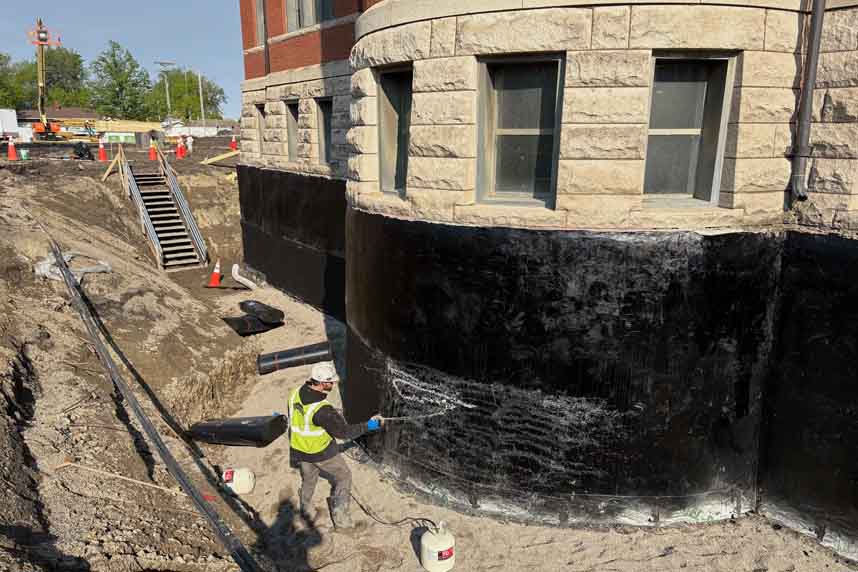
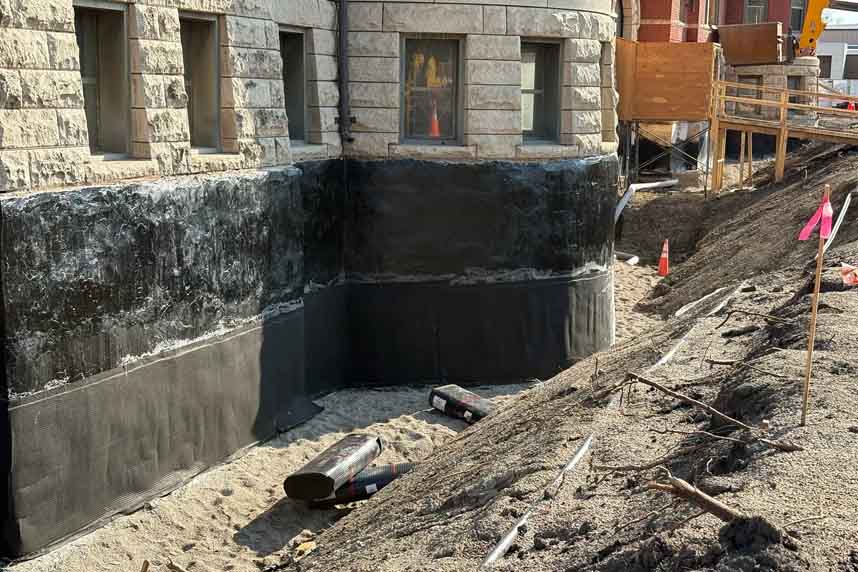
Inspect the Waterproofing Membrane
This step is mostly for new construction, additions, or places where the foundation membrane is still exposed. Look for gaps, damage, peeling, or open seams.
For late-season construction, install the membrane and drainage before backfilling and before hard frost makes the soil tough to work with. The goal is to waterproof the foundation before winter, not after the ground has frozen.
Waterproofing, Moisture Control, and Energy Efficiency Together
Why Waterproofing and Moisture Control Go Together
Moisture control is the key to controlling mold. If water continually gets in, drying or cleaning things out only solves part of the problem. You also need to stop the source of moisture for a lasting solution.
Exterior foundation waterproofing tackles the problem from outside the foundation. Grading, gutters, drainage, and sump pumps help manage water elsewhere. All of these work together for basement moisture control.
Where Air Sealing and Insulation Fit In
Basements often feel colder when air leaks in around rim joists or other gaps. If insulation is thin or missing in those areas, more heat can escape during winter.
By air sealing and insulating attics, floors over crawl spaces, and basements, homeowners can save an average of approximately 15% on heating and cooling costs.
A professional assessment can help identify basement and rim-joist areas that may be causing drafts or heat loss. Residential insulation services can address those problem areas.
Wind is also a contributing factor. Prairie Wind and Air Infiltration: Why North Dakota Homes Leak More Than Their R-Value Suggests explains why insulation alone may not fix comfort problems if outside air gets in through gaps.
When to Bring in a Professional
Most of the tasks on this checklist are simple fall maintenance jobs. Cleaning gutters, clearing window wells, checking grading, and testing your sump pump are all easy to do yourself.
But some problems are best left to the pros.
Call a foundation professional if you find cracks wider than a pencil or see water coming into the basement. If you have cold basement walls, drafts around the rim joist, or other signs of heat loss, an insulation and air-sealing assessment can show where your home needs work.
Frequently Asked Questions
Before the ground freezes, take one last walk around your house and check the basics: grading, gutters, cracks, the sump pump, and any visible membrane.
Once the ground freezes, you may have to wait until spring to fix exterior issues. An insulation and air-sealing assessment can help with the building-envelope side of your winter prep. If you live in Fargo, Bismarck, Grand Forks, Sioux Falls, or Belgrade, you can contact Cullen Insulation to schedule an assessment. If you’re planning a new home or addition, ask about exterior foundation waterproofing before backfilling.
EPA. “A Brief Guide to Mold, Moisture and Your Home.” United States Environmental Protection Agency, 18 Feb. 2026, www.epa.gov/mold/brief-guide-mold-moisture-and-your-home.
ENERGY STAR. “Why Seal and Insulate?” U.S. Environmental Protection Agency, www.energystar.gov/saveathome/seal_insulate/why-seal-and-insulate.
Federal Highway Administration. “Chapter 7 (Continued): Geotechnical Aspects of Pavements Reference Manual, NHI-05-037.” U.S. Department of Transportation, 27 June 2017, www.fhwa.dot.gov/engineering/geotech/pubs/05037/07c.cfm.
Yuja, Szilvia. “Waiting for the Soil to Thaw.” NDSU Agriculture, North Dakota State University, 25 Mar. 2024, www.ndsu.edu/agriculture/ag-hub/impact-stories/waiting-soil-thaw.