For many North Dakota homeowners, things don’t seem to add up. Their home is properly insulated, yet on windy winter nights, cold drafts still creep past the windows and the furnace never seems to shut off. Drafts and high heating bills persist. Their insulation R-value on paper isn’t matching the comfort they feel inside their home.
Thanks to North Dakota’s climate, the air is rarely calm on the Northern Plains, creating nearly continuous wind year-round. That wind puts constant pressure on a home’s building envelope. It pushes steadily against every wall and rooftop, driving air infiltration into homes that would otherwise feel airtight. When wind forces its way through a home’s envelope gaps, the link between wind and heating bills shows up fast.
Insulation’s R-value measures how well a material resists heat moving directly through it. It does not stop air from passing through the cracks and seams around that material. Wind pressure and the stack effect push outside air through those openings no matter how deep the insulation is. Infiltration is a pressure problem, not an R-value problem. Pairing insulation with professional air sealing solves both problems at once.
If your home feels drafty despite good insulation, a free estimate can help pinpoint where the wind is getting in.
Why the Prairie Makes North Dakota Homes Leak
North Dakota’s flat, open geography to the north and south allows air masses to cross the state freely. This leaves little standing between a home and the wind. The movement of these air masses and fronts causes near continuous wind during every season. Red River Valley wind travels across the flat terrain around Fargo with almost nothing to slow it, while Bismarck’s Missouri River landscape offers little windbreak either.
April and May bring the strongest gusts, though speeds hold steady at 10 to 13 miles per hour year-round. Cass and Burleigh counties both fall into Climate Zone 6A, a Cold-Humid zone, while Grand Forks County is classified as Very Cold in Climate Zone 7. The wind has a large impact on what it takes to keep homes warm in such cold climate zones.
How Wind Becomes Infiltration
Wind pushes air rather than simply blowing past a house. The windward side gets positive pressure while the leeward side gets suction, pushing cold air in and pulling heated air out. During North Dakota’s heating season, the stack effect is the driving force behind air leakage. It pulls heated air out through the attic while pulling cold air in near the foundation. This creates an indoor-outdoor pressure difference that peaks at the top of the house, causing attic gaps to leak the most. The Department of Energy’s online Advanced Infiltration tool treats both wind-driven and stack-driven leakage as measurable forces, not vague discomfort.
Why R-Value Alone Can’t Stop It
What R-Value Does and Doesn’t Measure
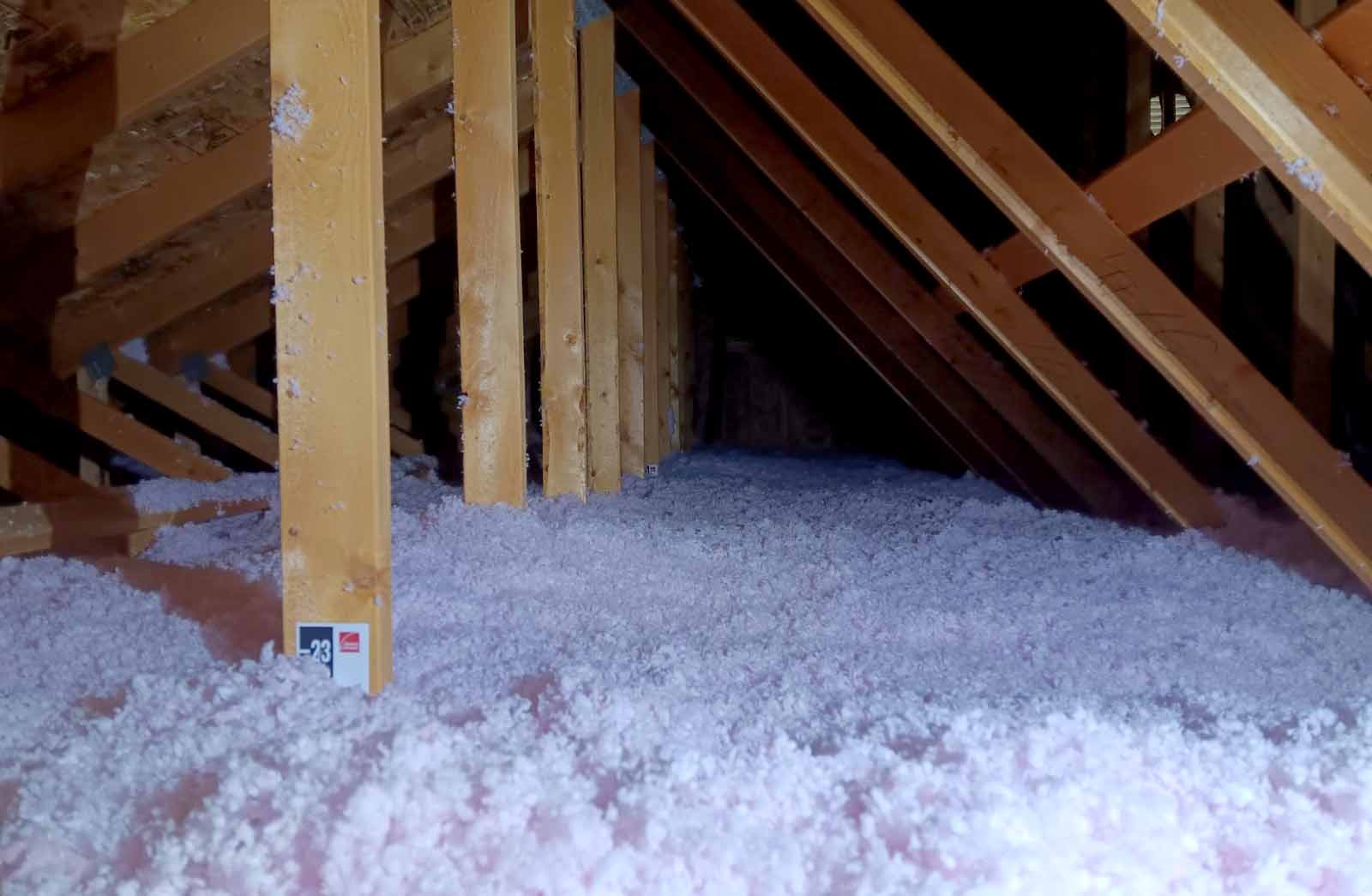
Understanding R-value vs air sealing explains why a well-insulated home can still feel drafty. R-value rates a material’s resistance to heat transfer through it. Insulation materials like fiberglass batts and loose-fill insulation slow that heat transfer effectively, but don’t stop the air leaks that flow through and around them. Only air sealing can do the job.
Think of insulation as a winter coat and air sealing as the zipper. A great coat left unzipped won’t keep you warm on a windy day. A home works the same way.
Why It Shows Up on North Dakota Bills
In 2020, the U.S. Energy Information Administration noted that space heating accounted for 42% of all energy consumption in U.S. homes. Homes in the Midwest and Northeast continue to consume more energy on average than homes in the South or West thanks to their higher space-heating demand. Taking the time to seal air leaks alongside insulation installation can save homeowners around 15% on heating and cooling costs. For a home facing near-constant prairie wind home energy loss, that adds up fast.
Where North Dakota Homes Leak, and What Fixes Each
The Big Leak Points
- Attic-to-wall transition: The area where the roof and wall intersect is a common leak point in older homes, right where pressure differences peak.
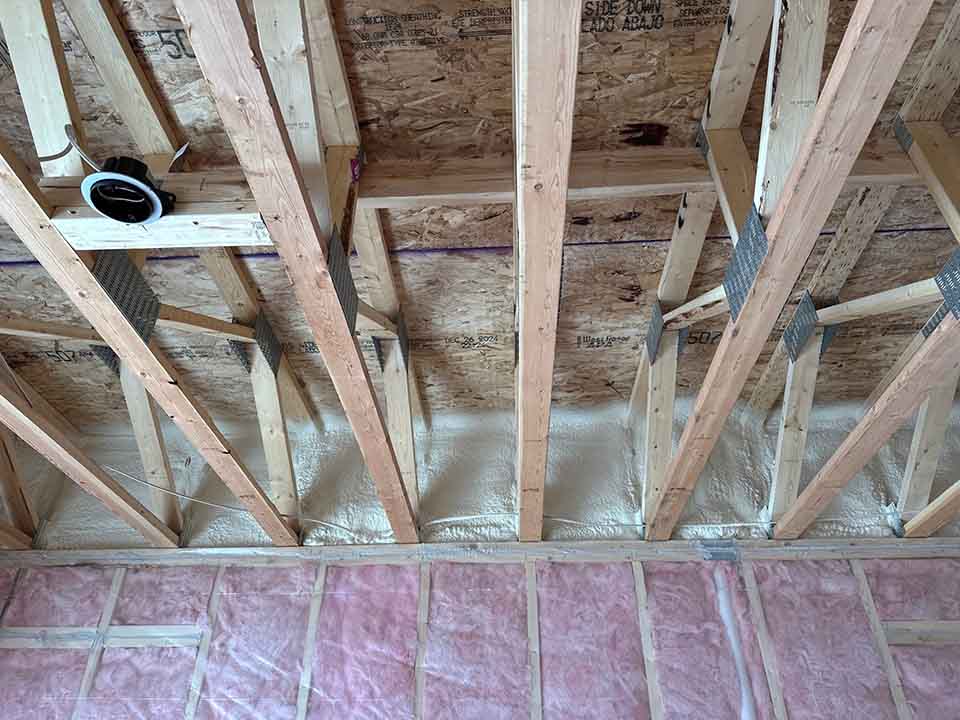
- Attic floor penetrations: These areas include gaps around top plates, plumbing and wiring chases, recessed lights, and chimney chases. Attic air sealing should happen before additional insulation is installed to ensure it performs at its rated value.
- Rim joists: Air leaks are very common where the band of framing at a home’s foundation catches wind on every exposed side. This area is often overlooked.
- Windows, doors, and sill plates on the windward side: These areas easily let air in and can be sealed with weatherstripping and caulking.
Matching the Fix to the Leak
To fix the leaks it’s important to find exactly where they are first. A blower door test North Dakota contractors can conduct uses a calibrated fan to depressurize your home and determine how much air your home is losing and where the prairie wind is getting in.
Closed-cell spray foam insulation air seals and insulates in one step, making it a great fit for rim joists and irregular spaces. Fiberglass insulation is a cost-effective insulating choice for attics and walls, though it needs a dedicated air sealing step to reach its full R-value.
Follow this sequence for the best results:
- Find the leaks first.
- Seal them.
- Bring your insulation up to target levels.
Sealing first protects your insulation investment.
Frequently Asked Questions
The Bottom Line: Seal First, Insulate Second
On the Northern Plains, how airtight your home is matters as much as how thick the insulation is. Remember to test for leaks first, seal what you find, then bring insulation up to target.
At Cullen Insulation, our team understands the prairie wind and the problems it creates for homes because we also live and work in the same wind every day. We use our local experience and extensive building science knowledge to better serve homeowners across North Dakota, with locations based in Fargo, Bismarck, and Grand Forks. Call us at 1.888.879.9805 or contact us today to explore our residential insulation services and receive a free estimate. With us, you’ll see how a properly sealed home compares to one that only looks good on paper.
References
Antonopoulos, Chrissi, et al. Guide to Determining Climate Zones by County: Building America and IECC 2021 Updates. Pacific Northwest National Laboratory, Sept. 2022. PNNL-33270, www.osti.gov/servlets/purl/1893981.
Arizona State University Energy Efficiency Center. “Energy Savings by Insulation.” ASU Energy Efficiency Center, 11 July 2023,https://eec.asu.edu/2023/07/11/energy-savings-by-insulation/.
Enz, John W. “North Dakota Topographic, Climatic, and Agricultural Overview.” Climate Summaries, North Dakota State Climate Office, North Dakota State University, www.ndsu.edu/agriculture/ag-hub/ag-topics/north-dakota-state-climate-office/climate-summaries.
Pacific Northwest National Laboratory. “Advanced Infiltration.” Building America Solution Center, U.S. Department of Energy, https://basc.pnnl.gov/redcalc/tool/advanced-infiltration.
Pacific Northwest National Laboratory. “Roof/Attic to Exterior Wall Air Control Upgrade.” Building America Solution Center, U.S. Department of Energy, https://basc.pnnl.gov/resource-guides/roofattic-exterior-wall-air-control-upgrade.
U.S. Department of Energy. “Building America Climate-Specific Guidance.” Building America, https://www.energy.gov/cmei/buildings/building-america-climate-specific-guidance.
U.S. Energy Information Administration. “Space Heating Consumed the Most Energy of Any End Use in U.S. Homes in 2020.” U.S. Energy Information Administration, 15 June 2023, www.eia.gov/pressroom/releases/press535.php.
U.S. Energy Information Administration. “Use of Energy in Homes.” Energy Explained, U.S. Energy Information Administration, www.eia.gov/energyexplained/use-of-energy/homes.php.