Insulation is most often sold as a cold-weather fix. So when the summer cooling bill spikes in July, most homeowners in the Dakotas and Montana blame their air conditioner. An under-insulated, leaky building envelope is usually the last thing on their radar, and that’s the problem.
Summers in the Northern Plains can easily hit the high 80°s and 90°s. In an under-insulated, unsealed home, the attic superheats under the sun, and hot outdoor air leaks in through gaps and cracks. The AC runs longer, the house still feels uneven, and the bill keeps climbing. Proper insulation and air sealing can solve the problem. The same insulation and air sealing that hold heat in during January also keep the heat out in July. The upgrades that make a cold climate summer cooling season more comfortable are the same ones that pay off all winter long.
Why a “Winter” Upgrade Lowers Your Summer Cooling Bills
Insulation does not actually “keep heat in.” Instead, it slows heat from moving through the building envelope in whichever direction it’s trying to go. In winter, heat flows from the warm house toward the cold outdoors. In summer, heat flows from the hot outdoors toward the cooled house. The same layer resists both directions.
That’s why the U.S. Department of Energy (DOE) considers insulation a year-round investment. Heating and cooling use more energy than any other system in a typical home. Properly insulating and air sealing reduces those costs in both seasons.
The Dakotas and Montana span insulation climate zone 6A and insulation climate zone 7, which the DOE classifies as “cold humid” and “very cold.” But a cold climate doesn’t mean cool summers. These zones still see hot summer days in the high 80°s and 90°s. In a home with thin attic insulation, that heat has an easy path straight into the living space.
Start at the Top — Attic Insulation Is Your Biggest Summer Win
In summer, the roof is the hottest surface on the house. An attic baking under the sun radiates heat down into the living space all afternoon. A deep, even layer of attic insulation for summer heat blocking is the most effective barrier against downward heat gain, and it pays off just as much every winter.
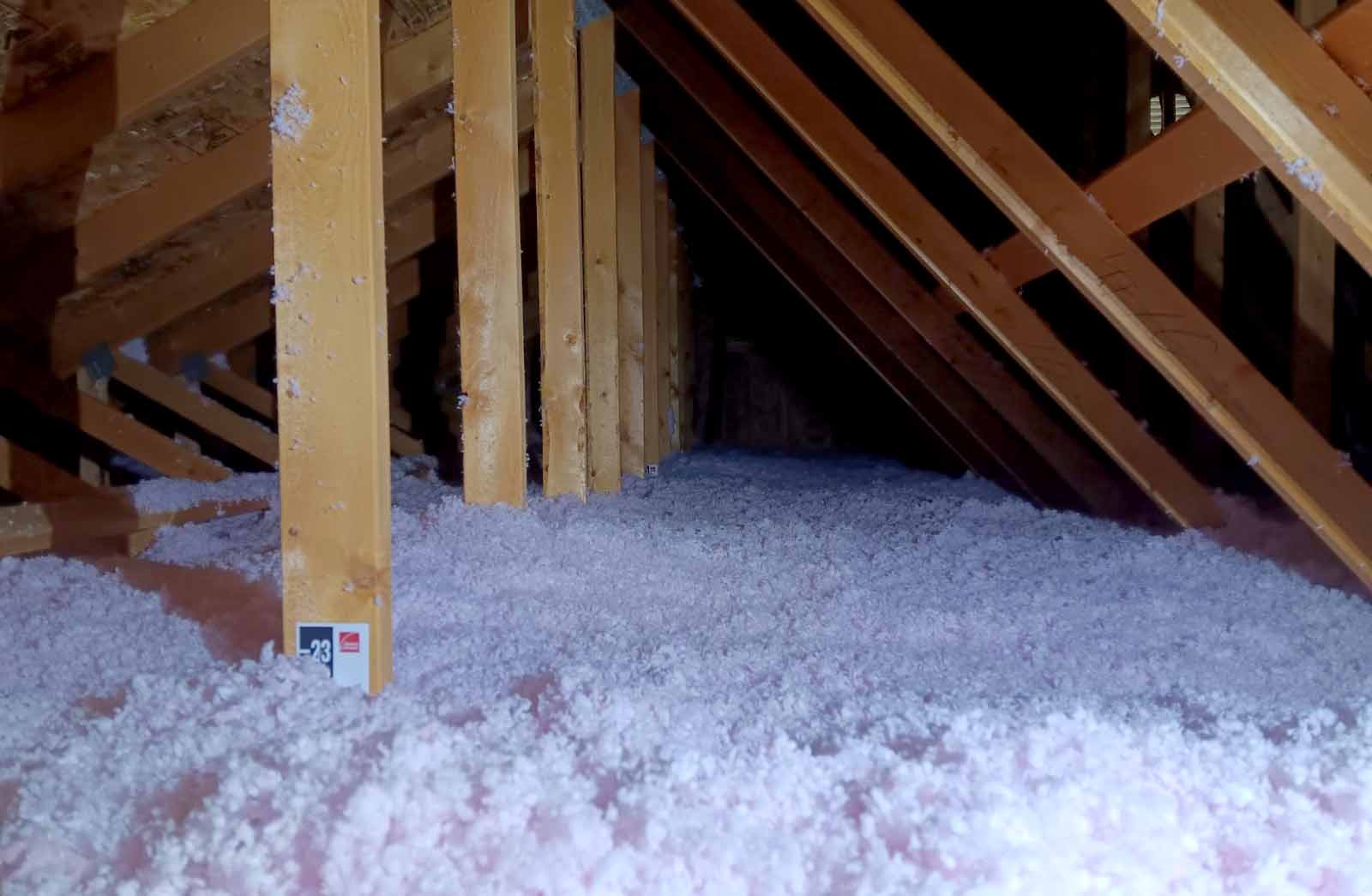
Most homes built before current energy standards fall well short of today’s cold-climate attic insulation recommendations. Homeowners can do a quick self-check of their attic insulation. If the ceiling joists are visible when they look across their attic floor, that means there’s room to add more. An in-home assessment sets the exact target.
For a cost-effective top-off, blown-in fiberglass attic insulation installed over the attic floor adds depth and even coverage after air leaks are sealed. For conditioned attics or homes with the HVAC unit in the attic, a spray foam attic roofline application moves the insulation boundary to the roof deck, bringing the attic inside the thermal envelope.
Air Sealing: The Step That Makes Insulation Work
Insulation slows heat transfer, but it doesn’t stop air from moving through gaps, cracks, and penetrations. Those gaps let hot outdoor air leak in during the summer and cool indoor air leak out. Even a well-insulated home still underperforms if it isn’t sealed.
Air sealing summer work belongs before insulation, not after. Montana State University Extension puts it plainly: seal first, then insulate. Insulation won’t perform as rated if air can still travel freely through cracks around framing, windows, and doors.
Most air leaks are found in these places:
- Attic floor penetrations: plumbing stacks, wiring, recessed lights, the attic hatch, and the gap where the walls meet the ceiling
- Rim joists and sill plates at the top of the foundation
- Around exterior door frames and windows
Choosing to seal and insulate the attic and other parts of the home can save homeowners an average of about 15% on heating and cooling costs. That’s why professional air sealing belongs at the start of any insulation project.
Walls, Rim Joists, and Foundations
The attic is the priority, but heat sneaks in at other points too.
Walls
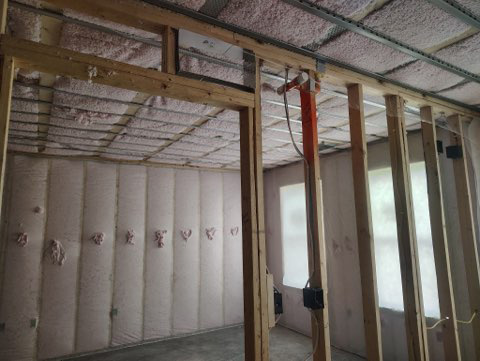
Wall cavities in older homes are often under-insulated. To properly insulate them, they can be dense packed with blown-in insulation through small access holes. During a siding update or renovation, adding rigid foam board continuous insulation as exterior sheathing reduces thermal bridging around the framing.
Rim Joists
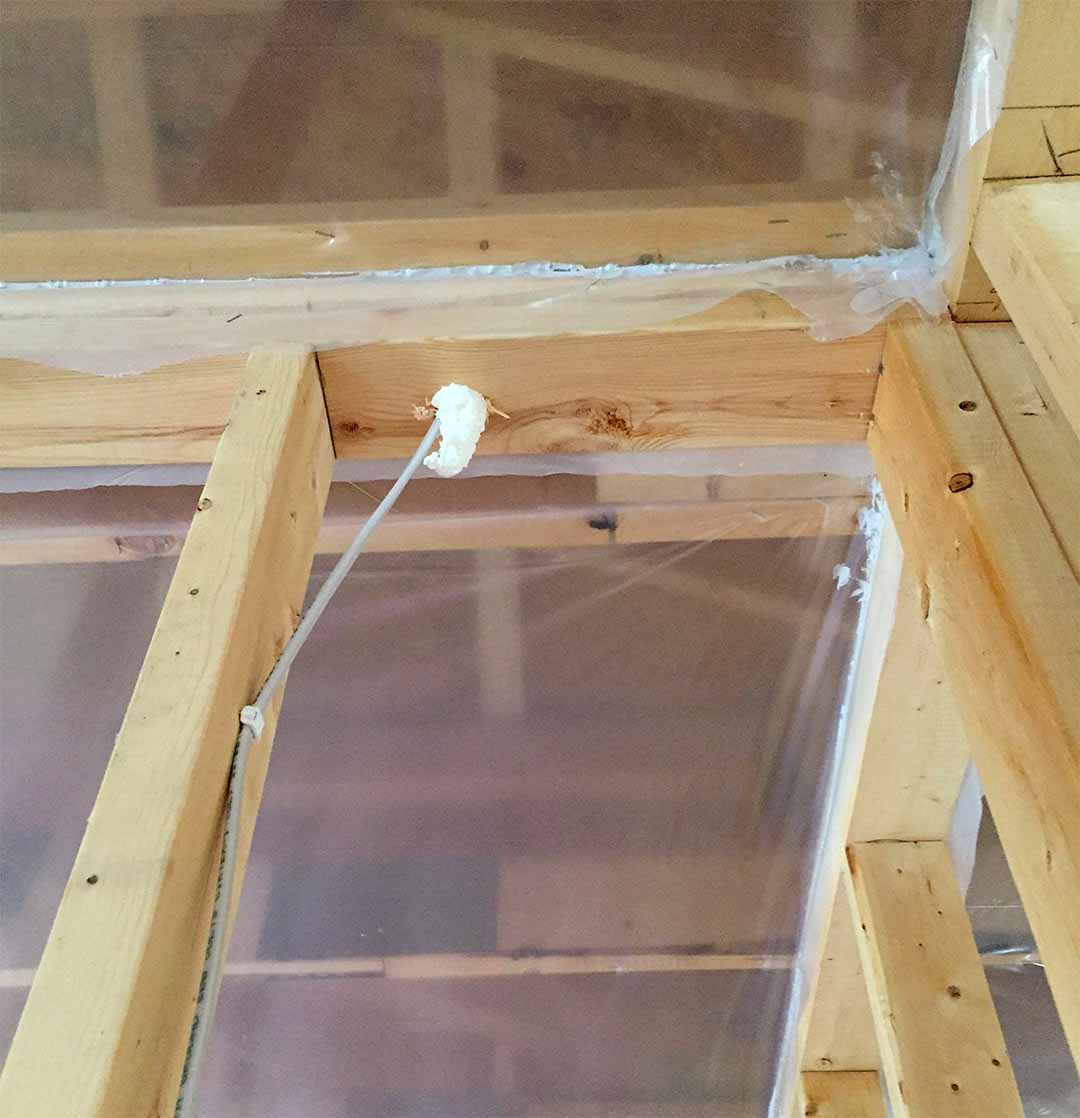
The band of framing on top of the foundation, known as the rim joist, is a frequently overlooked point of potential leaks. Closed-cell spray foam seals and insulates the area in a single pass, reducing both summer heat gain and winter heat loss at the same spot.
Foundations and Continuous Insulation
For basement walls and as continuous exterior sheathing, rigid foam board insulation provides an unbroken thermal layer and resists ground moisture. It is a durable way to tighten the lower envelope that an attic-only project would leave untouched.
Follow this actionable order to maximize energy efficiency:
- Air seal the attic floor and major penetrations.
- Top off attic insulation for depth and even coverage.
- Address rim joists and accessible walls.
- Add continuous/foundation insulation where the project allows.
Frequently Asked Questions
The Right Partner Makes All the Difference
Whether you want to reduce your summer cooling bills in North Dakota, South Dakota, or Montana, the path is the same: seal the leaks, add the insulation, and work through the envelope in order. At Cullen Insulation, we follow the same steps to create tailored energy solutions that save valuable energy and money.
Founded in 1988 and serving communities across the Dakotas and Montana, we have spent more than three decades helping homeowners build tighter, more efficient homes. With locations in Bismarck, Fargo, Grand Forks, Sioux Falls, and Bozeman, our dedicated team brings deep regional knowledge and certified expertise to every project. We know what these climate zones demand and how to deliver results that hold up season after season. Contact us today at 1-888-879-9805 or contact us to schedule your free in-home assessment.
References
ENERGY STAR. “Methodology for Estimated Energy Savings.” U.S. Environmental Protection Agency, www.energystar.gov/saveathome/seal_insulate/methodology.
ENERGY STAR. “Recommended Home Insulation R-Values.” U.S. Environmental Protection Agency, www.energystar.gov/saveathome/seal_insulate/identify-problems-you-want-fix/diy-checks-inspections/insulation-r-values.
Montana State University Extension. “Home Insulation Choices.” Montana State University, www.montana.edu/extension/housing/documents/Home Insulation Choices.pdf.
University of Missouri Extension. “Insulating and Weatherizing Your Home.” University of Missouri, extension.missouri.edu/publications/gh4881.
U.S. Department of Energy. “Building America Climate-Specific Guidance.” Office of Energy Efficiency and Renewable Energy, www.energy.gov/cmei/buildings/building-america-climate-specific-guidance.
U.S. Energy Information Administration. “Use of Energy in Homes.” U.S. Department of Energy, www.eia.gov/energyexplained/use-of-energy/homes.php.